
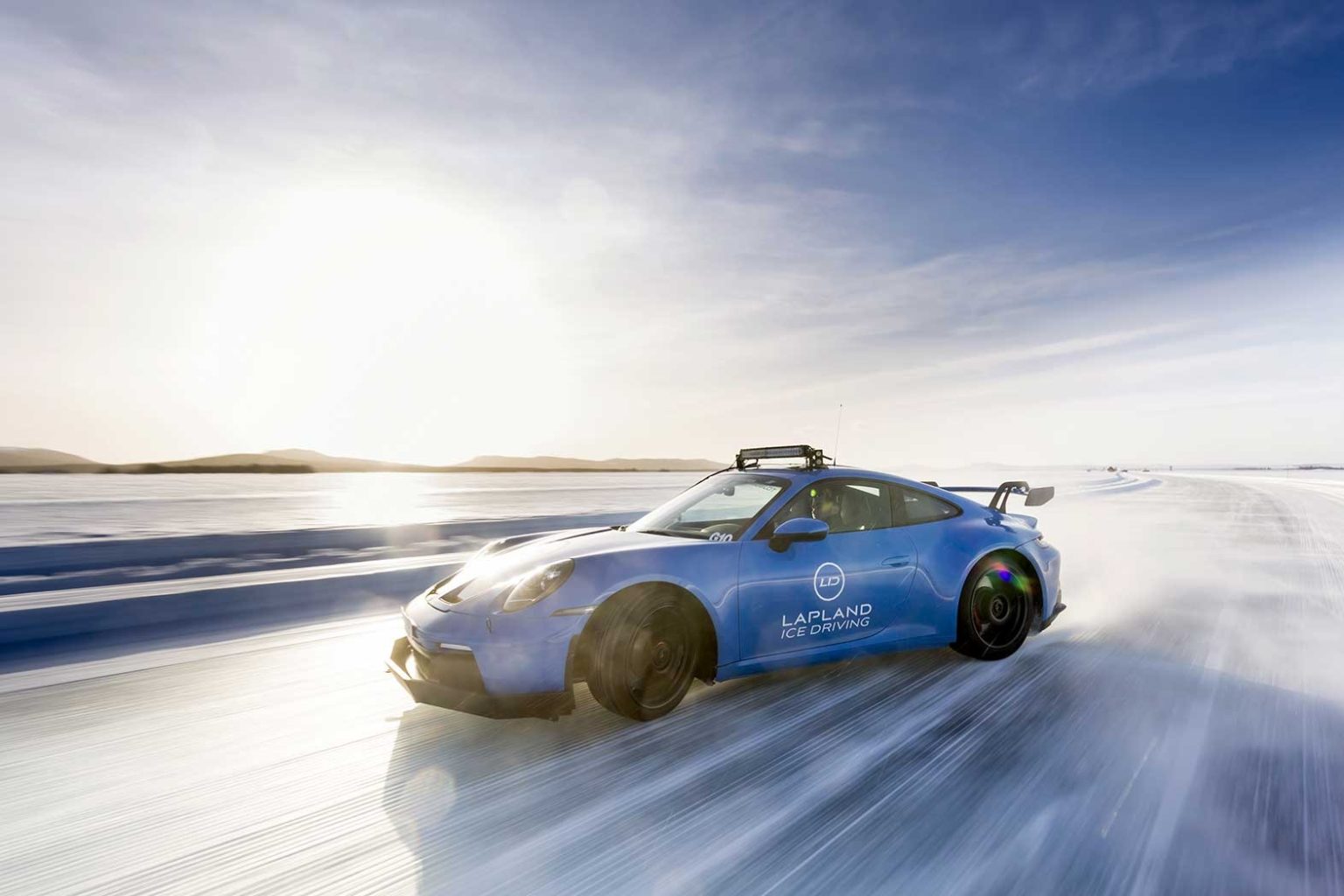
Ice Driving in the Arctic
Take away the grip and everything changes. Welcome to the strange, addictive world of driving cars on ice.
Why the Arctic might be the ultimate place to learn what a car can really do
Take away the grip
Most performance cars are designed to find grip.
Wide tyres. Sophisticated suspension. Four-wheel drive. Traction control. Aerodynamics. Electronics quietly making hundreds of calculations while the driver concentrates on the road ahead.
Then somebody takes the car to a frozen lake.
Suddenly the relationship changes.
Speeds can be lower, but everything happens more visibly. Weight moves. The tyres search for purchase. Steering, throttle and braking have consequences you can feel.
And that is precisely why drivers travel thousands of miles north to experience it.
Ice makes the invisible visible
On a dry road, many of the forces acting on a car are disguised by grip.
On ice, they become obvious.
Brake and weight moves towards the front axle. Accelerate and it moves rearwards. Turn abruptly and the tyres have to divide limited grip between changing direction and everything else you’re asking them to do.
A good ice-driving experience allows those reactions to be explored in a controlled environment with professional instruction.
You begin to anticipate rather than react.
The objective isn’t simply to slide a car around for photographs. Done properly, ice driving is an exercise in understanding balance.
The sideways bit just happens to be enormous fun.
Studded tyres change everything again
The cars used for serious Arctic driving aren’t simply ordinary road cars dropped onto snow.
Purpose-appropriate tyres are fundamental to the experience, with studded tyres providing extraordinary mechanical interaction with the frozen surface.
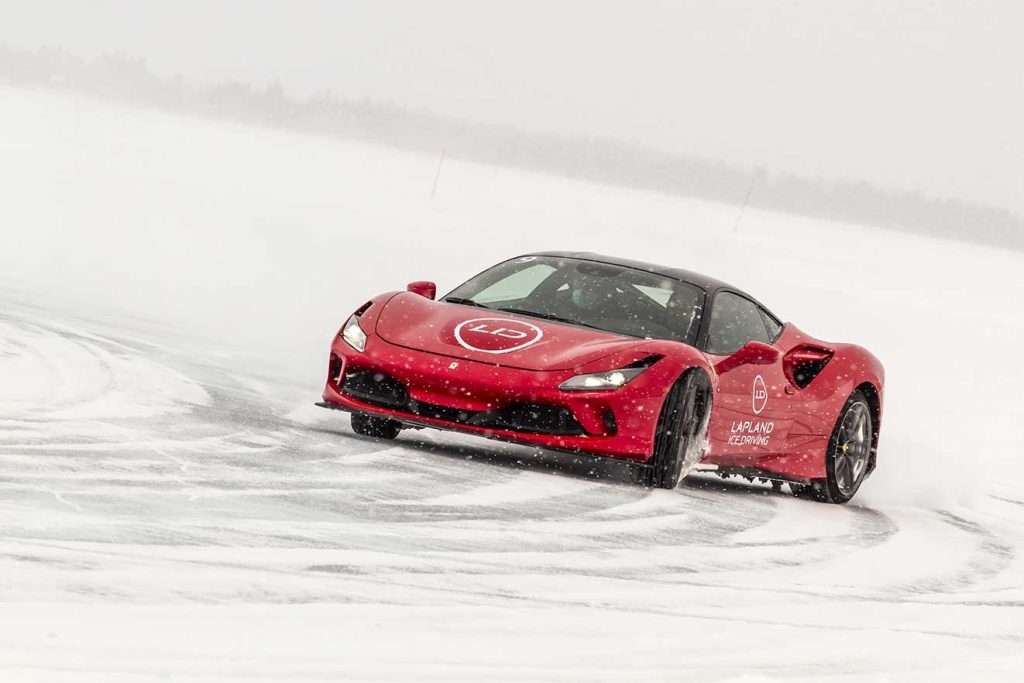
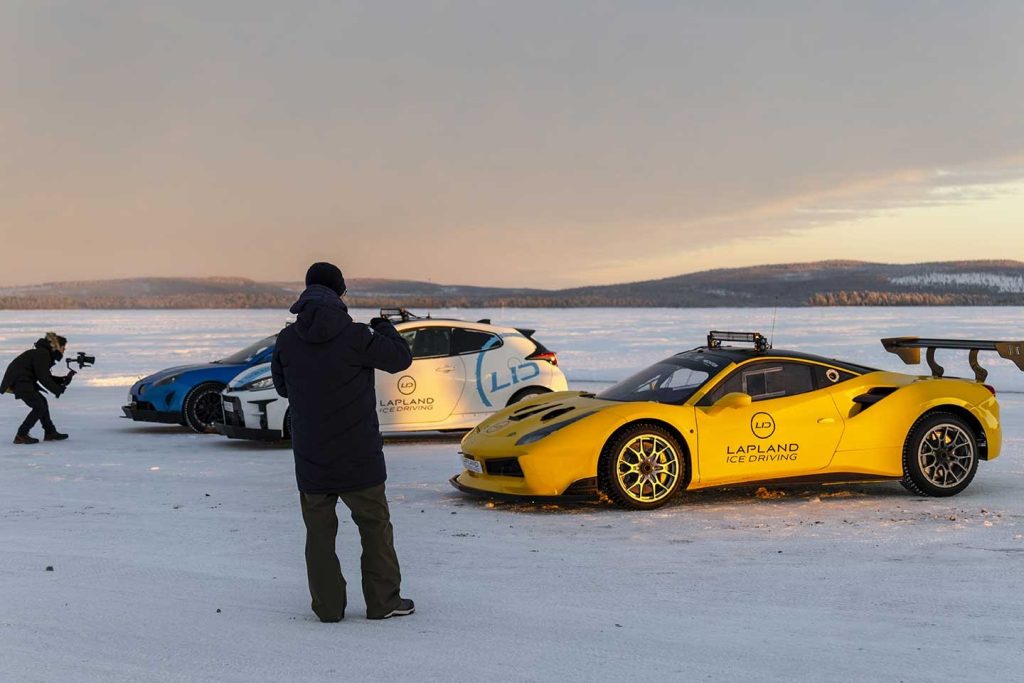
Different programmes use different vehicles and tyre specifications, from relatively accessible performance cars through to rally-inspired machinery and serious supercars.
That means two ice-driving trips can have completely different personalities.
One might be about technique and progression.
Another might recreate some of the sensations of rally driving.
A third might give you the surreal experience of driving a car you’d normally associate with a warm, dry mountain road across a landscape of snow and ice.
The circuit can change overnight
A conventional race circuit is fixed.
Ice isn’t.
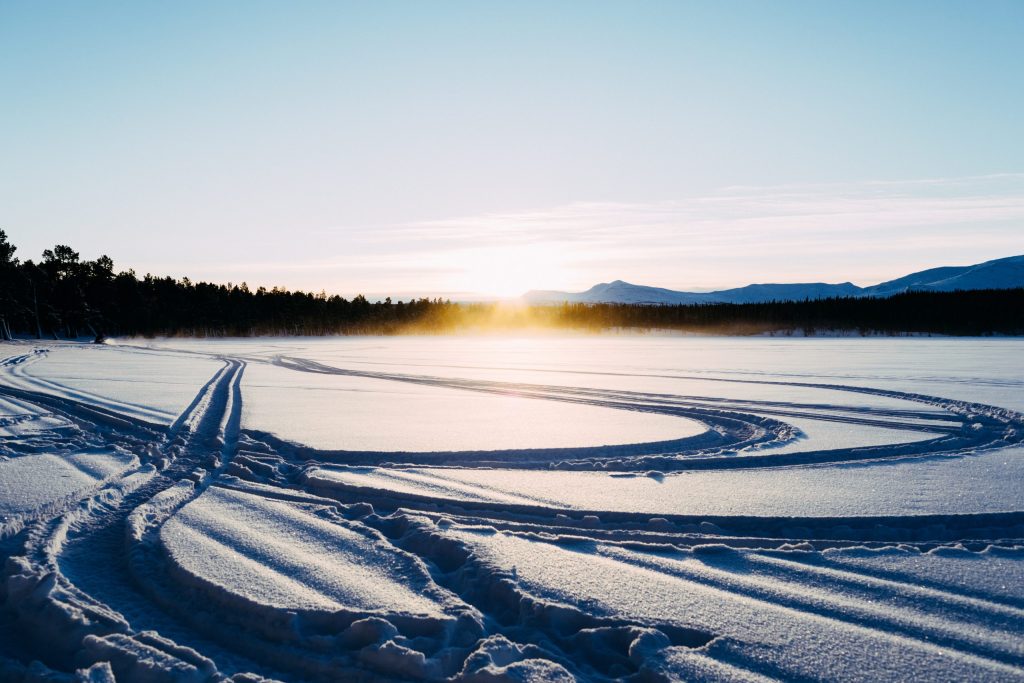
Temperature, snow, wind and the condition of the surface all influence the experience. Tracks can be prepared across frozen lakes and large ice areas, creating layouts with space that would be difficult to replicate on asphalt.
There is something appealingly temporary about it.
For part of the winter, a frozen landscape becomes a driver’s playground.
Then spring arrives and the circuit disappears.
You don’t need to be a racing driver
The prospect can look intimidating.
Cars travelling sideways across ice make dramatic photographs, and experienced drivers can carry remarkable angles and speed.
But that isn’t where everybody starts.
The better question when choosing an experience is how the instruction is structured.
What car do you begin in? How much one-to-one coaching is provided? Does the programme progress through different exercises? How much actual driving time is included?
Seat time matters.
A trip offering repeated sessions over several days is a very different proposition from a short demonstration or passenger experience.
The aim should be progression at a pace appropriate to the driver, not pretending everyone arrived as a rally champion.
The location is half the story
Then there is everything outside the car.
Travel far enough north in winter and the light itself feels different. Snow-covered forests, frozen lakes and long blue hours transform the landscape.
Depending on the destination and programme, days behind the wheel might be combined with snowmobiles, dog sledding, saunas, remote lodges or evenings around a fire.
And occasionally, if nature cooperates, the Northern Lights.
None of those things are guaranteed, and they don’t need to be.
The important point is that an Arctic driving experience can be more than a driving course. Done well, it becomes a journey in which the environment is as memorable as the machinery.
That matters if you’re travelling with a partner who doesn’t necessarily want to spend every available minute discussing opposite lock.
Modern or analogue?
This is where ice driving becomes particularly interesting for enthusiasts.
A modern four-wheel-drive performance car can provide astonishing traction and speed while allowing the driver to explore sophisticated vehicle systems.
A rear-wheel-drive sports car can demand a very different approach.
An older rally-inspired machine strips the experience back further, placing greater emphasis on mechanical feel and driver input.
There isn’t a correct choice.
The question is what you want to discover.
The car, the tyres, the instruction and the surface combine to create the character of the experience.
Choose the trip, not just the car
It’s easy to choose an ice-driving holiday because there’s a photograph of a particular car on the website.
Look deeper.
How much driving do you actually get? How many drivers share each car? Is the programme progressive? What instruction is included? Are the tracks private? What happens away from the ice? Is accommodation part of the experience or simply somewhere to sleep?
For couples, look at the programme for the non-driver too.
For groups, consider whether you want an intensive driving school atmosphere or something more social and expedition-like.
The headline car might catch your attention.
The structure of the journey determines whether you’ll still be talking about it years later.
A completely different relationship with a car
Great driving isn’t always about going faster.
Sometimes it is about taking away something you normally depend upon.
Grip.
On ice, familiar inputs produce unfamiliar results. The car moves around beneath you, mistakes become obvious and smoothness suddenly matters enormously.
Then, eventually, something clicks.
The car rotates. You look where you want to go. Your hands become calmer. The throttle becomes part of the steering.
And for a few glorious seconds, it all makes sense.
Explore ice-driving and Arctic adventures on Stradora.
Keep reading.

A French icon. On home roads.
Kevin McCloud takes the iconic Citroën DS home to France for a classic car road trip along the French Riviera…

Self-drive safari: why Africa is made for a road trip
Open roads, remarkable wildlife and somewhere extraordinary to stop for the night. Discover the appeal of exploring Africa with your…

The case for taking the long way: why the Grand Tour is back
Great roads, memorable stops and time to enjoy everything between them. Why the journey deserves as much attention as the…